
Discover Ostia Antica, the Port of Rome
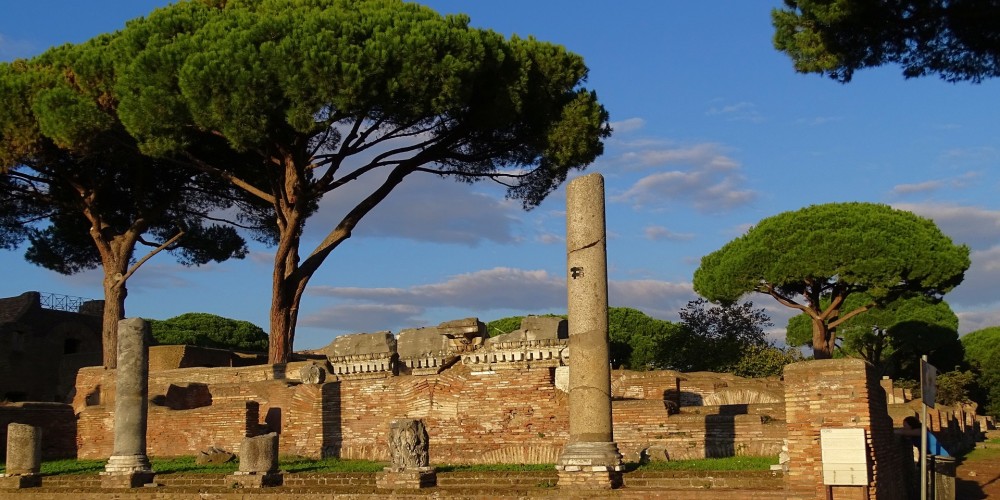
The name Ostia comes from the Latin word Ostium , meaning mouth of a river. Today, the modern Ostia lies just a few kilometers from the Ancient town due to the siltation of materials carried by the continuous flow of the waters, whereas the old town is now abandoned and turned into an incredibly well preserved archaeological site.
Walking through the charming alleys of the historical location means traveling back in time to a glorious past within easy reach, so this is the ideal day trip from Rome if you wish to maximise your time. Comparing it to the more famous Pompeii, Ancient Ostia has nothing to envy to its Southern counterpart as it gives the visitor an interesting insight into the Roman Empire and Rome itself.
Being so close to the Capital City, you can comfortably arrive there both by car or public transportation, getting on the Roma – Lido, a suburban train that connects Ostia with Rome center.
https://www.romeprivateguides.com/upload/CONF87/20200825/ostia-2530729_1920.jpg
History
According to the legend, Ancient Ostia was originally founded by Ancus Marcius, who was the fourth king of Rome. Previously, along river Tiber there was another town that was soon destroyed by the king who established a roman colony and a military base to protect his brand new town.
The first step to a new established role of Ostia was under Julius Caesar dictatorship. At that time, Caesar ordered Ostia to perform a central role in Rome grain supply to feed the fast-growing amount of people through a new Port. Soon Ostia grew more and more through trades and warehousing.
During Roman Empire, several Emperors strongly believed in the importance of having Ostia as the central Port of Rome. Among these Emperors, Tiberius was the one who enriched it by ordering the construction of Ostia’s Forum. His successors, Emperor Claudius and Trajan, kept on renovating this valuable city by building up a harbour each. Claudius’ Harbour, located on the northern mouth of the river, was soon replaced by the larger hexagonal Trajan’s Harbour to avoid siltation.
https://www.romeprivateguides.com/upload/CONF87/20200825/italy-1314574_1920.jpg
What to see in Ancient Ostia
The true highlights of the archaeological site of Ancient Ostia are definitely theBaths of Neptune which hosts well preserved stunning mosaics.
The Baths of Neptune are located in the eastern part of Ancient Ostia, near the main street called Decumanus Maximus . As other public baths of Roman Empire, this one is fully equipped with heating and cooling facilities and even a gym. Romans knew all about training so they built their public baths in the way that each visitor could go through a healthy path, across cold, tepid and hot rooms to strengthen both body and soul.
Climbing up to the top of the Baths, an impressive view of huge black and white mosaics depicting marine scenes will take your breath away. These brilliant mosaics are inspired by mythical characters such as mermaids and sea creatures and the God Neptune, who gave his name to these marvellous Baths.
Another must see is Ancient Ostia Theatre , located in the area nearby the Decumanus and Baths of Neptune. This is a semi circular theatre originally built under Emperor Augustus by his friend Agrippa. Although the back wall had been ruined and destroyed throughout the last centuries, the rest of the theatre is almost entirely preserved and both the majority of seats and the marble floor at the bottom are still in use. Going up to the top, there is an astonishing view of the ruins of the archaeological site.
Last but not least, we cannot forget to mention the Decumanus Maximus , the main fascinating street of the Ancient Ostia. Starting at Porta Marina, where many centuries ago the land was embraced by the deep blue waters of the Sea, this 1 kilometer long road divides in two the ancient site and all the relevant buildings were located by the side of it.
Undoubtedly, Ancient Ostia is a worth seeing alternative choice for a day trip from Rome at a short distance, the ultimate destination for anyone interested in archaeology and Ancient Rome.
Contact us to arrange your Ancient Ostia Day Trip!
Book With Extra Flexibility
Choose new departure dates if your plans change.
Reach out to us anytime via online chat, phone or email.
Get credit for future trips if you need more time to decide.
Change to a different tour run by the same tour operator.